
Independent editorial guidance on compatibility, device settings, safety, and responsible use.
Installing Jellyfin on a Fire TV Stick
Independent editorial guidance on compatibility, device settings, safety, and responsible use.
If you searched for “Como Instalar o Jellyfin no Amazon Fire TV Stick Passo a Passo,” start with your exact Fire TV model and the distribution options it offers. A store installation is straightforward when the matching app is available for the device. Sideloading means installing a package manually. Before taking that route, confirm that the Jellyfin project documents a compatible package and that you can identify its source. This guide covers the checks to make before and after either kind of installation.
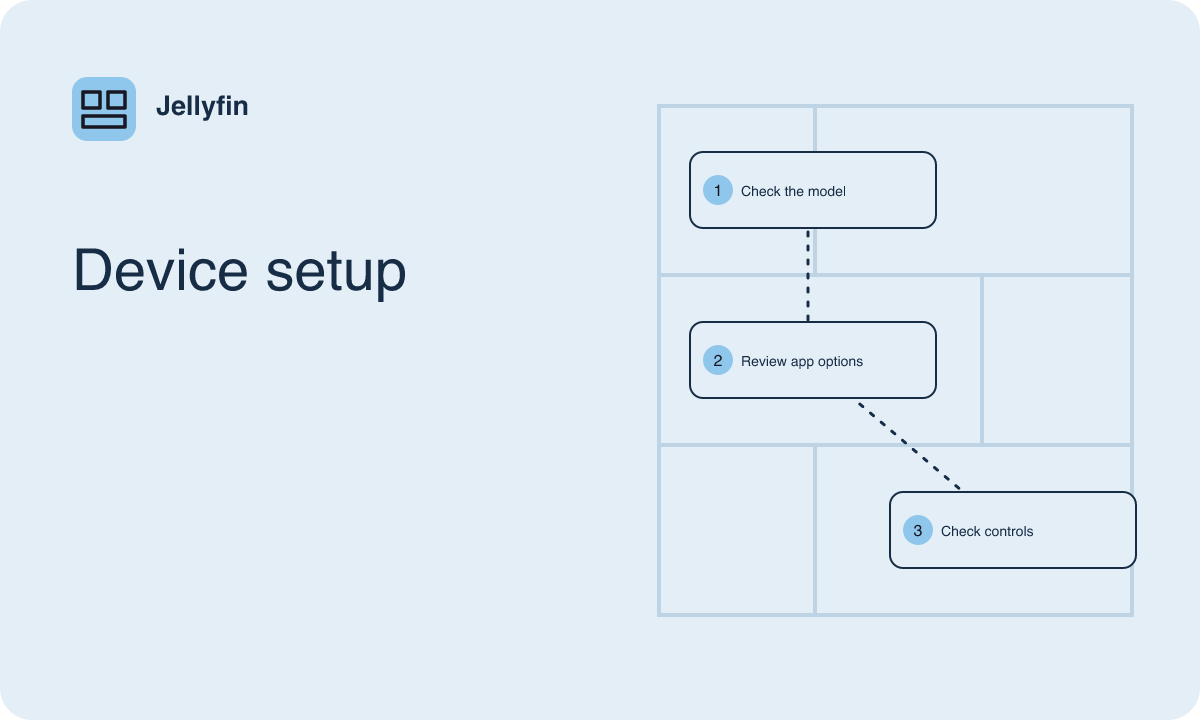
Check the device and the store first
Use the Fire TV remote to open system information and find the model, software version, and available storage. Some televisions include Fire TV software, and some use a separate Fire TV Stick connected over HDMI. If you have both, confirm which one you are controlling before checking its app library. The app needs to be compatible with the device that will launch it. The display's brand and resolution are secondary during installation.
Follow the Jellyfin project's client references to check for a documented Fire TV distribution. If the documentation points to a store, look for the app on the Fire TV itself and compare the listing with the project reference. Check whether the device offers installation and whether the profile you use can manage apps. An unavailable store listing has several possible explanations, including firmware compatibility, region, or device policy. Identify the likely reason before trying an alternative. A missing listing by itself gives you little information about whether a manually installed release will work.
Identify a package you can trace
When the store route is unavailable, read the project's guidance for manual TV installation. Confirm whether it covers your Fire TV software and which release asset it identifies for your hardware. Android phone and television packages may have similar names, but a phone interface can be awkward when the only input is a remote. If several packages appear in a release, compare their descriptions for platform and processor support rather than choosing by filename alone.
Use a distribution source identified in the project documentation. If a forum or video describes a different source, check it against the project's current instructions before taking any action. Avoid packages whose origin you cannot establish. If you cannot trace a package to a documented source or verify that it suits your device, keep looking for a supported client option. For example, another screen in the household may already have a compatible browser or playback app while you evaluate the Fire TV route.
Keep manual installation permission limited
Review Fire TV's documented instructions for installing apps manually on your exact model. Settings and menu availability can vary. Some devices allow a particular app to request package installation. In that case, grant permission only to the app involved for the time you need it. Use a transfer route supported by the device, open the package from the documented source, and read the installer prompts before confirming. If access is restricted by device management or household controls, ask the person responsible for the device to review the restriction.
If you see a security warning or the installation fails, check the package's source, compatibility, available storage, and any existing client installation. A package signed differently from the one already installed can fail as an update. Repeated attempts with unrelated packages make that situation harder to diagnose. Once you complete the documented installation, revisit the permission setting and turn off manual installation access for the app you used. Confirm that the Jellyfin client appears in the device's app list and opens with the remote.
Verify navigation and server access
When the app starts, see whether the directional pad moves a visible focus indicator through the interface and whether the back button returns you to the previous screen. A package can launch successfully and still offer poor television controls. Try selecting an item and returning to the opening screen before treating the install as a success. If control requires a touchscreen gesture the remote cannot reproduce, revisit the package choice.
For the first server connection, put the Fire TV device on a network that can reach the server. Confirm the network selection in Fire TV's settings, especially if you have a separate guest network or the television itself also connects to Wi-Fi. Ask the server administrator to supply the appropriate connection information. If another client on that network can browse the library while the Fire TV client cannot, record what the Fire TV displays and check its client settings before making shared server changes.
Play a baseline clip and a typical title
Start a short familiar video with ordinary stereo sound. Pause, resume, and return to the library. Then play something closer to what you expect to watch, including the subtitle track and sound setup you actually use. If playback stops when a subtitle is selected, compare the same scene without that subtitle while leaving all other options in place. If sound is missing, confirm the selected TV or soundbar output and try a different track if one is available.
Tell the server administrator which sample worked and which failed. If playback information shows that one attempt required conversion on the server, that helps explain why two titles might behave differently. For buffering across several titles, check how strong the device's network connection is at the TV. A Stick behind a large display can be in a different spot from a phone used to test the same Wi-Fi. If the equipment supports another network connection, compare the same scene while keeping the playback settings fixed.
Make future maintenance straightforward
Record the Fire TV model, system version, client name, and the channel used to install it. Store updates and manually installed updates may follow different schedules. When you hear that a new client release is available, follow the guidance for your installed channel and check whether the new package still suits the device. Before changing channels, check whether the project documents how to make that switch and what may happen to local settings.
Keep a note of the short test clip and the menu steps that take you to captions and audio. The Fire TV setup is ready for daily use when the person holding the remote can find a title, play it at their normal viewing settings, and return to the library. If a system update later changes that behavior, your notes will help identify whether the change is in app access, television controls, or playback.