
Independent editorial guidance on compatibility, device settings, safety, and responsible use.
Finding and Installing the Latest Jellyfin Client Release
Independent editorial guidance on compatibility, device settings, safety, and responsible use.
The latest release you can use depends on which client you run, how you installed it, and what your device supports. A search for “Jellyfin Atualizado Oficial” can surface results for the server, Android phones, televisions, and other players together. Follow the release record for your actual client. That distinction helps you decide whether an update is available, whether it addresses a problem you have, and how to check the result afterward.
Find out what is installed
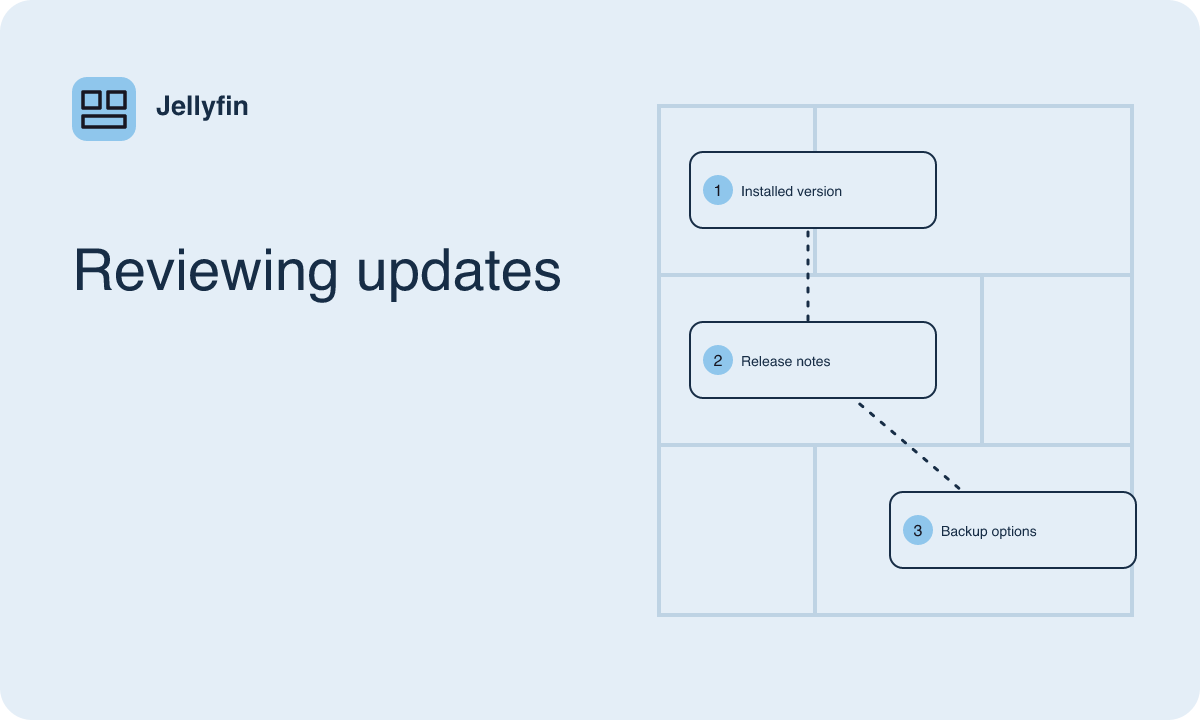
Open the client's information screen or use the operating system's app details to find the installed release. Write down the client name exactly as it appears. If your household has several Jellyfin devices, label the device in your notes too. A familiar icon on a TV and a similar icon on a phone can represent separate applications. Your app version and the server version may both be relevant, but they describe separate pieces of software.
Next, identify the installation channel. A store's app management screen may show whether it manages the installed client. If you installed it manually, try to locate your original notes or the project release information you used. Use the model and system version of the device to determine which update path applies. If you inherited the setup and cannot identify its source, resolve that uncertainty before choosing a replacement. On a shared television, find out whether the person who manages the device has restricted updates or uses a specific profile to install software.
Match announcements to the client and channel
Go through the project's documented app listings to locate the release information for your client. Compare an announcement with the product name and operating system it mentions. Look for whether the announcement describes a stable release or a preview intended for people who want to try upcoming changes. If a project publishes both, the most recently posted build may be a preview. Use the stable channel when that is the one you intend to maintain.
Store updates can appear at different times for different devices. A project announcement generally tells you that a release exists. The store's screen on your device tells you whether that update is offered through the store for your installation. If you see a new release mentioned but the app still shows as current, check the release notes for staged distribution and operating system requirements. Also confirm you are looking at the same client. This is a good time to check how the device handles automatic app updates, particularly on a TV that rarely returns to its home screen.
Read release notes for a practical decision
Look for changes that could affect the way you use the device. A fix for subtitles is especially relevant if someone in your household depends on them. A change to minimum operating system requirements matters when the device is older or managed by an organization. Changes to direct playback, sound output, or interface behavior can affect a television differently from a phone.
Write down any relevant release notes in terms you can test. For example, if an update describes a fix involving captions after seeking, find a short title with a caption track and choose a scene that starts after the opening. After installation, seek to the scene and confirm that captions and audio are still aligned. If the notes mention a server requirement and you do not control the server, ask its administrator to confirm compatibility. Keep client and server updates distinct so you know which one a particular note describes.
Update using the distribution you already trust
If the store manages your app, use the update offered for the existing listing. Leave enough time for the install to finish before opening it. A home screen tile may still launch the previous build while the store has an update waiting. Once installation completes, verify what the app or system info screen reports. If you use automatic updates, checking the displayed release is also helpful when you need to know whether a recent change came from an update.
For a manually installed package, use the source described in the documentation for that client. Check that the package suits the device and is intended to update your existing installation. Android can reject a package if its signing identity differs from the one already installed. When that happens, review the documentation for the channels involved and verify the source. Avoid removing the working app until you understand what local settings or cached data could be affected. If a new release is incompatible with the operating system, check which supported client choices remain for that device.
Verify playback and routine controls
Run a small before-and-after check using the same server, connection, title, and playback options. Pick something you know can play on the device so that you can tell whether routine behavior has changed. Open the library, start a video, seek forward, pause, and resume. If your device handles a particular sound configuration, check that the output reaches the expected speakers. Include subtitles if someone needs them.
Test at least one daily action outside playback as well. On a television, check that you can return from a title to the library and that remote focus remains visible. On a phone, try rotating the screen during playback if you normally do that. If a problem appears, check whether it happens in another client on the same network. A second client helps isolate the issue, though different capabilities can result in different playback behavior for the same title.
Leave a clear record for the next update
Keep a short record with the date you installed the release, the device and operating system, the channel, and what you checked. When a family member says the app changed recently, that record lets you compare a known timeline with what they saw. It is more precise than relying on a search result's date, which might refer to a different build or announcement. Add the server release only if you can verify it or the server administrator supplies it.
If the update creates a reproducible problem, gather the smallest set of details that illustrates it. Describe the exact action, the visible result, and whether an ordinary sample file behaves differently. Keep connection information and personal titles out of public reports. Before considering a rollback, read the project's guidance about older releases and changes to local settings. A useful update routine gives you a clear source, a repeatable playback check, and enough context to ask for help when a change matters.